The right bag depends on the product’s bulk density, particle shape, filling equipment, closure, storage conditions, and required print performance—not just its appearance or quoted price. By the end, you will have a specification, trial plan, and supplier comparison method for selecting bags that run reliably and protect the filled product.
Key takeaways
- Calculate bag volume from both loose and settled product density.
- Match fabric, liner, coating, and seam strength to the product and load.
- Approve printed BOPP woven bags only after filled-bag testing.
- Compare suppliers using specifications, test results, consistency, and delivered performance.
Match the Bag to Product Density, Filling Method, and Load
Bulk density determines volume, not just weight. Divide the target fill mass by the product’s bulk density to estimate required volume, then check both loose and settled density; aerated powder can occupy more space before settling. Add practical headspace so the product does not block the closure or burst the seam.
Measure the finished bag’s empty length, width, and gusset, then measure the filled dimensions on the actual product. A bag that matches the nominal empty size can lose usable volume when its gusset opens unevenly, the filling expands, or the closing fold consumes height.
Specify target fill weight, acceptable filled length and width, and safe working load separately.
Use this selection sequence:
- Match the bag volume to the calculated product volume, then confirm that the filled shape fits pallets, conveyors, and storage racks.
- Match construction to the load: fine powder needs controlled dust retention, while sharp or abrasive material needs stronger fabric, seams, and bottom construction.
- Match the opening to the filling line: use an open mouth for weigh-and-fill systems that stitch or paste the top; use a valve bag for pneumatic or spout filling when automatic closure matters.
- Test the closure at the intended speed. A misaligned valve, weak pasted bottom, or overfilled stitched top can cause leakage and line stoppages.
For how to choose bopp woven bags in ahmedabad, require pilot bags filled with your product, then run handling, stacking, and transport trials before approving dimensions, closure, and tolerances.
Compare Construction, Barrier Performance, and Product-Specific Requirements
A heavier bag is not automatically a safer bag. Compare the fabric, laminate, seams, closure and barrier as separate BOPP woven bag specifications, because a strong woven base can still leak through a weak valve or split at the bottom.
| Product | Construction to compare | Barrier and failure risk |
|---|---|---|
| Fine powders | Higher fabric GSM, closer tape spacing, strong pasted bottom, valve or heat-sealed liner | Fine dust escapes through weave, seams and valve; specify a PE liner or suitable coating after checking filling compatibility |
| Grains and animal feed | Ventilated woven fabric, stitched or pasted closure, tested seam strength | Excess barrier can trap moisture; poor stitching allows grain loss during handling |
| Fertilizer | Chemical-compatible PP, reinforced corners and bottom, high seam strength | Hygroscopic fertilizer absorbs moisture and cakes; use a moisture barrier and test storage under humid conditions |
| Chemicals | Confirm PP, BOPP film, ink, adhesive and liner compatibility with the exact chemical | Do not rely on “chemical resistant”; check swelling, softening, odour transfer and migration documentation |
| Abrasive products | Higher tape denier, robust laminate, reinforced bottom and abrasion-resistant outer surface | Sharp particles cut tape and scuff film; run filled-bag drop and rubbing trials |
Ask for fabric GSM, tape denier, warp and weft counts, laminate film GSM or thickness, bag-weight tolerance, and tensile strength in both directions. Also record lamination type, print side, seam construction, top and bottom style, valve dimensions and safe working load.
For food, feed or pharmaceutical contents, request a material declaration for PP resin, BOPP film, inks, adhesives and liner, plus applicable Indian food-contact migration documents. Test production bags on the actual filling line; laboratory fabric results will not reveal dust leakage, valve misalignment or bottom-pasting failure.
Specify Printed BOPP Bags Without Confusing Appearance with Protection
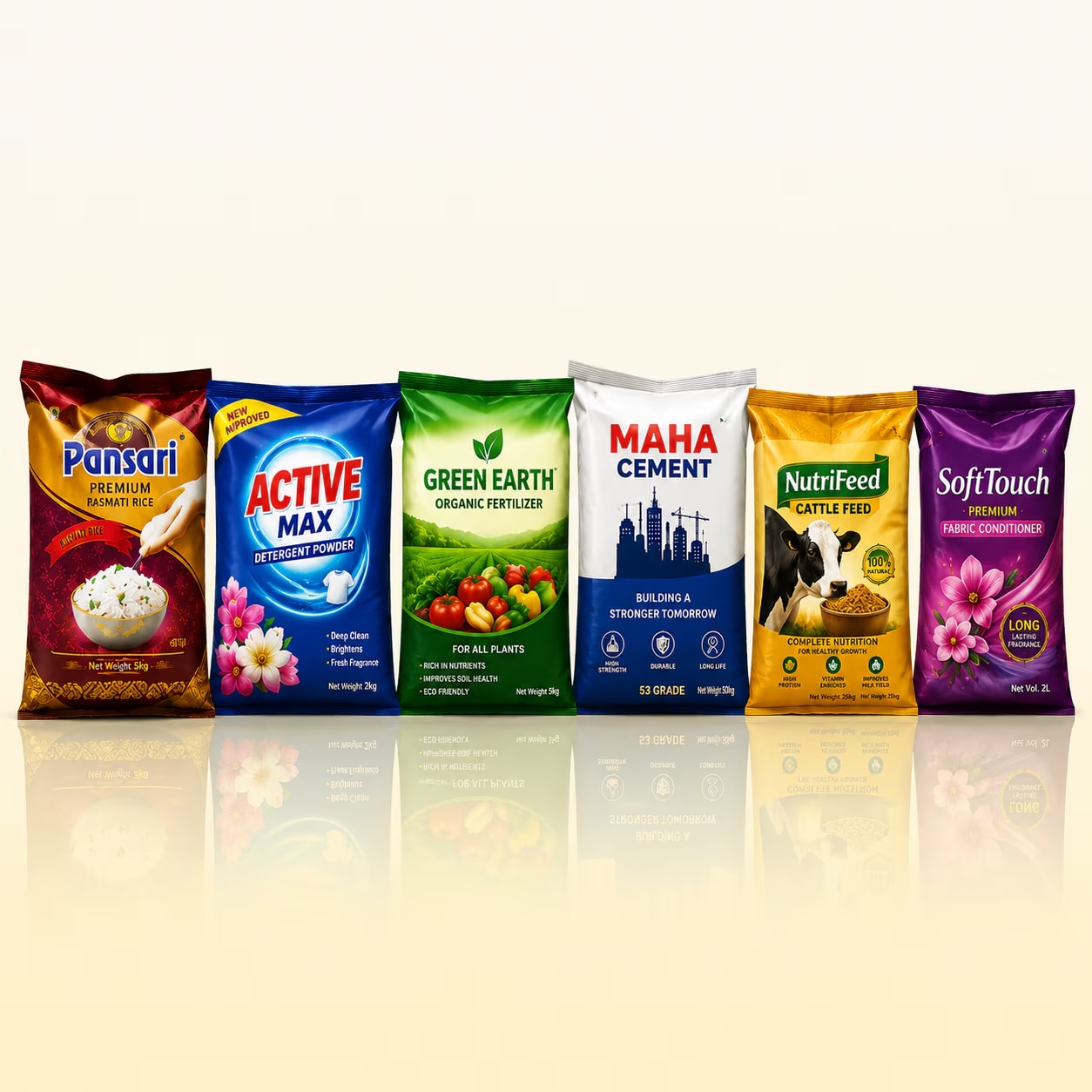
A sharp image does not prove that printed BOPP woven bags will protect the product. Specify reverse printing on the BOPP film, followed by adhesive or extrusion lamination, so the image sits behind the film rather than on an exposed surface. Approve the fabric, film thickness, laminate type, and closure separately.
Before mass production, approve a signed artwork and print-control sheet covering:
- Exact bag dimensions, gusset, filled dimensions, and closing fold
- Colour references, print registration, trapping, logo position, and permissible shade variation
- Rub resistance after filling, stacking, and transport, not only on an empty sample
- Barcode contrast, quiet zones, distortion, and scan performance on filled bags; verify linear codes against ISO/IEC 15416 or 2D codes against ISO/IEC 15415
- Batch identification, sampling frequency, inspection method, rejection limits, and treatment of nonconforming bags
Scan the barcode at the warehouse and retail scanner distance. A glossy laminate can improve shelf appearance while reducing friction between stacked bags, so specify the required outer-surface grip and test pallet stability.
Compliance depends on the product and destination. Request a declaration for food-contact use where applicable, and confirm ink and adhesive suitability. For regulated chemicals or dangerous goods, match hazard text, symbols, and UN packaging markings to the product classification.
Do not claim recyclability from “PP” alone; residue, inks, adhesives, liners, and local collection determine the actual route.
Run Filled-Bag Tests Before Approving a Bulk Order
Approve a bulk order only after the proposed bag survives a trial with your actual product, filling line, closure equipment, pallet pattern, and handling routine. Empty-bag inspection cannot reveal dust leakage, valve misalignment, line jams, or a bottom fold that tears under load.
1. Fill pilot bags on the intended production line at normal speed. Record filled length, width, gusset, weight, closure alignment, filling time, dust escape, and rejected bags. A bag that matches the empty dimensions can lose usable volume when it expands or when the closing fold occupies space.
2. Handle the filled bags as operators and conveyors will: lift them by the planned grip, turn them, slide them, and transfer them onto pallets. Drop samples from the highest routine handling height, then inspect the valve, stitched or pasted seam, corners, and bottom fold for splitting, pinholes, and product loss.
3. Build the specified pallet pattern and stack the intended number of layers. Hold the stack for the planned storage period, then move it with normal forklift or manual handling. Watch for leaning, layer slip, crushed corners, bag creep, and loss of shape; glossy lamination can reduce grip between layers.
4. If transport includes vibration or outdoor exposure, perform a route-representative movement trial and expose samples for the specified sunlight period. Request UV-stabilised polypropylene when bags will sit uncovered, because unstabilised material can lose elongation and tensile performance.
Record failures, set acceptance limits, and retain an approved filled bag plus a sealed reference sample. Tie every later batch to those dimensions, construction details, and tolerances.
Compare Ahmedabad Suppliers on Usable Performance, Not Price Alone
A reliable BOPP woven bag manufacturer in Ahmedabad earns approval by proving performance on your product, not by offering the lowest quotation. Require a written specification, pilot-bag inspection, filling-line trial, filled-bag handling and stacking tests, then approve a retained reference sample.
- Record empty and filled length, width, gusset, bag weight, fabric GSM, tape denier, warp and weft counts, laminate-film GSM or thickness, tensile strength in both directions, closure style, and safe working load.
- Ask the woven packaging bag supplier to demonstrate valve alignment, bottom pasting or stitching, dust leakage control, and trouble-free operation on your actual line.
- Compare delivered usable bags after allowing for rejects, wastage, freight, liner inclusion, minimum order quantity, and one-time cylinder or artwork charges.
- For food, feed, pharmaceutical, or sensitive chemical products, obtain material declarations for PP resin, BOPP film, inks, adhesives, and liner, plus applicable migration or compliance documents.
| Evidence | What it reveals | Purchase control |
|---|---|---|
| Pilot bags | Dimensions, print, seams, closure defects | Reject before production |
| Filled-line trial | Jams, valve errors, filling speed | Name the approved machine settings |
| Stacking trial | Compression, deformation, pallet stability | State maximum stack height |
| Retained sample | Agreed appearance and construction | Define batch tolerances |
Amples Laminates LLP can be assessed using this same retained-sample process; a catalogue description cannot replace filled-bag evidence. Put every approved measurement and tolerance on the purchase order, including the procedure and frequency for batch inspection.
Related products
 | BOPP (Biaxially Oriented Polypropylene) Woven Bags are high-strength packaging bags manufactured by laminating a printed BOPP film onto a woven... View product → |
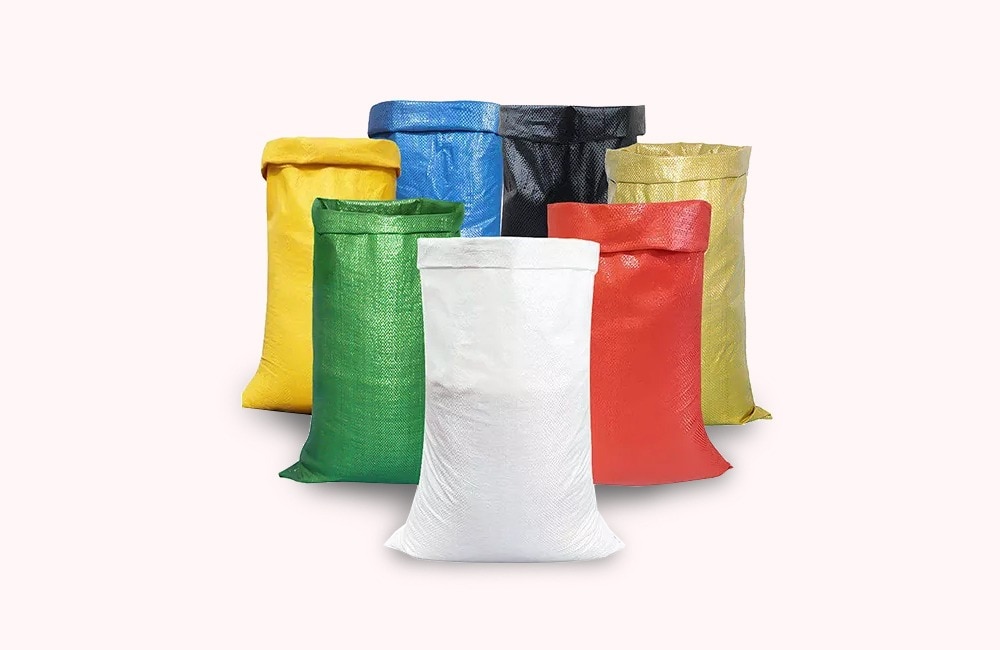 | PP (Polypropylene) Woven Bags are one of the most widely used packaging solutions for industrial, agricultural, chemical, food, and construction... View product → |
Frequently asked questions
How do you calculate the right BOPP woven bag size?
Divide the target fill mass by the product’s bulk density, then check loose and settled density. Add headspace so the product does not obstruct the closure or overstress the seam.
Which BOPP woven bag specifications matter most?
Check bag dimensions, fabric weight, denier, coating or liner, seam construction, closure type, load rating, barrier requirements, and compatibility with the filling method.
Do printed BOPP woven bags protect products from moisture?
Printing affects appearance and brand communication. Moisture protection comes from the bag’s coating, liner, laminate structure, closure, and seam integrity.
How should you test BOPP woven bags before a bulk order?
Fill production samples using the intended equipment, stack and transport them under realistic conditions, then inspect seams, corners, closures, print, leakage, and handling damage.
How should you compare a BOPP woven bag manufacturer in Ahmedabad?
Compare documented specifications, sample consistency, filled-bag test results, quality controls, lead times, complaint handling, and usable performance alongside the quoted price.
Keywords