

A vacuum pouch can lose its seal immediately, develop a slow leak after several days, or appear defective when the real problem is a damaged hose, valve, or chamber gasket. You will be able to identify the leak path, separate pouch defects from machine faults, and set up a controlled sealing and inspection process.
Key takeaways
- Mark the leak location and record when the vacuum disappeared.
- Inspect the seal, film, corners, and pouch body in sequence.
- Control sealing heat, dwell time, pressure, and cooling together.
- Keep food, powder, liquid, and sharp edges outside the seal zone.
Start by Classifying the Leak
A vacuum pouch leaking at the seal is not automatically a pump problem. Retain the failed pack, mark the leak position, and decide whether vacuum disappeared immediately or after hours or days; that timing separates a sealing defect from a puncture, handling damage, or laminate failure.
For anyone searching vacuum pouch seal for failure in Ahmedabad, location alone does not identify the cause.
- Puncture: A pinhole appears in the pouch body, often near a corner, sharp product edge, or abrasion mark; the seal itself remains continuous.
- Channel leak: A narrow path runs through the seal, sometimes invisible until you flex the sealed edge or pressure-test it. Wrinkled film or uneven jaws commonly create it.
- Incomplete seal: The seal looks narrow, discontinuous, cloudy, or weak because heat, dwell, or pressure did not fuse both sealant surfaces.
- Contamination defect: Oil, brine, powder, sauce, fibres, or laminate dust sits in the seal and leaves a local non-bond that resembles a sealed area.
- Wrinkle: A fold crosses the seal width, creating a leak path along its ridge.
- Trapped product: Food or liquid caught between the sealant layers prevents fusion and often leaves a visible lump or wet spot.
- Laminate failure: Delamination, splitting, or blistering occurs away from the seal, pointing to film construction or post-seal damage rather than jaw settings.
A short pass does not clear the pouch: flexing, compression, or product movement can open a hidden defect later. Preserve failed samples and map defects by seal position.
Use a Repeatable Inspection Sequence
1. Retain the failed pouch and mark the leak position before opening it. Inspect the full seal under bright light, checking seal width, continuity, contamination, wrinkles, pleats, and short unsealed sections; a strong-looking average seal can still hide one intermittent defect.
2. Flex the sealed edge by bending it gently along the seal, then repeat the inspection. A leak that appears only during flexing points to a weak fusion, wrinkle, or channel rather than a simple body puncture.
3. Pressurise the pouch with low-pressure air and submerge it in clean water. Squeeze one zone at a time: bubbles from the seal identify a seal leak, while bubbles from the flat film identify a pinhole, laminate damage, or post-seal puncture.
Do not rely on immersion of a vacuumed pouch alone; it may reveal nothing without internal pressure.
4. Test for a hidden channel by isolating sections of the seal with temporary clamps or by folding and clamping the seam in short intervals during the pressure test. Bubbles that stop when one section is isolated reveal the channel’s route, even when its entry point is concealed by a continuous outer seal.
5. Repeat the test on an empty pouch, a filled pouch, and a pouch after controlled flexing or compression. Record whether the failure is immediate or appears after several hours, then compare the defect’s position across samples. This pattern separates handling-related vacuum packaging seal problems from repeatable machine or material defects.
Control Heat, Time, Pressure, and Cooling Together
A seal can fail immediately from poor contact, open during handling because hot tack is weak, or lose vacuum hours or days later through a marginal channel. Temperature, dwell time, jaw pressure, and cooling time must be set as one process, not adjusted in isolation.
| Failure pattern | Variable condition | Result |
|---|---|---|
| Immediate seal failure | Temperature or dwell time too low; pressure uneven or too low | Sealant layers do not fuse across the full width, leaving an open path |
| Immediate seal failure | Temperature, dwell time, or pressure too high | Sealant is squeezed out, the film distorts, or the effective seal width narrows |
| Weak hot tack | Seal exits the jaws before it has cooled; cooling time or cooling contact is inadequate | Evacuation, stacking, or handling pulls the hot seal apart even though the cooled seal later tests strongly |
| Vacuum loss after hours or days | Heat or dwell is just below the laminate’s fusion window, or pressure creates a thin edge | A small channel or stressed area creeps open under stored vacuum |
| Film damage and delayed leakage | Excessive heat shrinks or embrittles an oriented layer | The seal looks acceptable at release but cracks during flexing or storage |
Do not treat a higher jaw temperature as a universal fix for vacuum pouch sealing issues. Ask the film supplier for the seal-initiation temperature and validated operating window for the actual laminate, then change one setting at a time.
Record seal width, jaw alignment, cooled seal strength, and hot-tack performance; a wide seal cannot compensate for non-uniform pressure or contamination.
Keep Product and Film Out of the Seal Zone
Leave a clean, empty band above the product; a seal made over food, powder, oil, or liquid is a contamination defect waiting to become a vacuum pouch leaking at the edge. Keep the seal zone wide enough for the equipment’s specified seal width, not merely wide enough to catch the jaws.
- Fill below the marked seal line and leave headspace so the product cannot rise during evacuation. Overfilling pushes product into the jaws and reduces the effective seal area.
- Wipe both inner film surfaces before placing the mouth in the machine. Remove crumbs, powder, grease, and condensation; even a thin residue can form a channel leak.
- Centre and align the pouch mouth. Pull the film flat across the support bar, then smooth out pleats before the jaws close. Vacuum will tighten a wrinkle, not flatten its folded sealant layer.
- Arrange hard, sharp, or irregular product away from the seal and pouch corners. A protruding bone, stem, frozen edge, or rigid fragment can puncture the film during sealing, stacking, or transport.
- Watch the evacuation cycle. Reduce the vacuum rate or stop the cycle if liquid or loose particles migrate toward the mouth; let them settle below the seal zone before sealing.
Inspect the sealed edge while it is still flat. A clean, continuous seal with no trapped product, pinched film, or narrow section prevents many vacuum packaging seal problems before handling creates a post-seal puncture.
Verify the Pouch, Machine, and Supplier as One System
Do not blame the pump until a known-good pouch passes on the same machine. A seal leak usually points to temperature, dwell, pressure, cooling, jaw alignment, contamination, or laminate condition; a pump, hose, valve, or gasket is implicated when the machine also fails a capped-inlet or empty-chamber hold test.
Use a controlled comparison:
- Run an empty pouch with a clean, wide seal and record the seal position, width, and vacuum decay.
- Repeat it with the same pouch on a second machine, then run a known-good pouch on the suspect machine.
- Inspect the pump oil or filter, hose connections, valve seat, lid gasket, and jaw faces; a recurring leak at one jaw position indicates non-uniform contact.
- Map failed samples by seal location and flex the seal-to-laminate transition; delamination, pinholes, foil flex-cracks, or a puncture outside the seal identify material or handling damage.
For vacuum pouch sealing issues, change one setting at a time. A higher jaw temperature is not a universal cure: excess heat can thin or squeeze out sealant, shrink film, and narrow the effective seal.
Ask any vacuum pouch manufacturer in ahmedabad, including Amples Laminates LLP, for laminate construction, sealant resin, nominal seal width, seal-strength and hot-tack results, plus the leak-test method, defect sensitivity, sample size, and acceptance limit. Require filled-production samples; “leak-proof” alone proves nothing.
A search for vacuum pouch seal for failure in ahmedabad should end with retained failed packs and test records, not location-based assumptions.
Related products
 | Vacuum pouch Manufacturers We are also supply in Andhra Pradesh, Arunachal Pradesh, Assam, Bihar, Chhattisgarh, Goa, Gujarat, Haryana, Himachal Pradesh,... View product → |
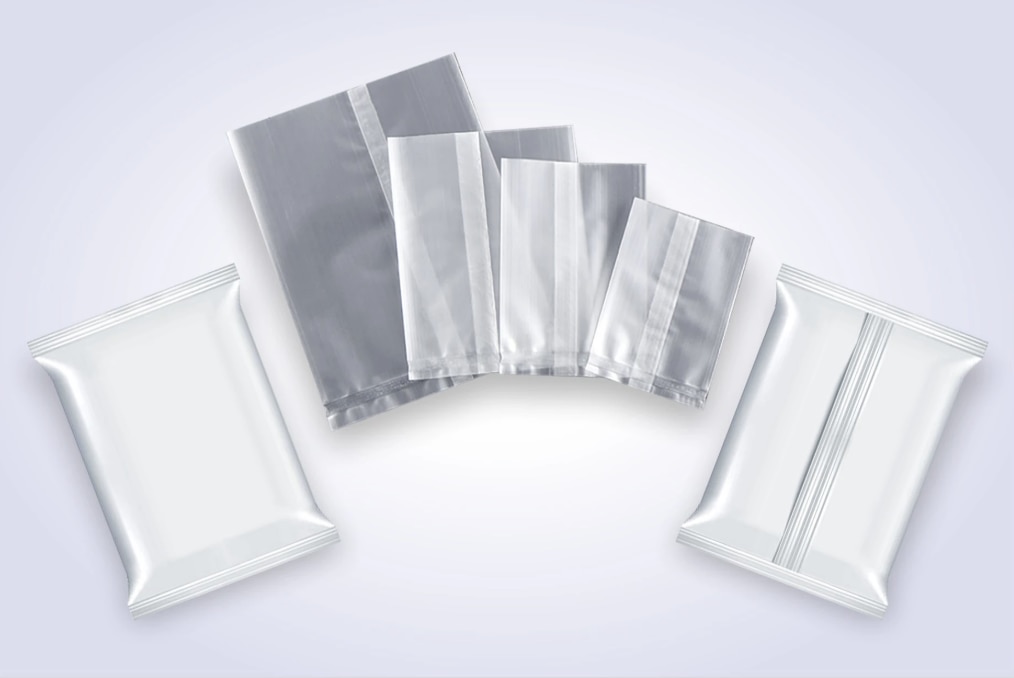 | Vacuum pouch Manufacturers We are also supply in Andhra Pradesh, Arunachal Pradesh, Assam, Bihar, Chhattisgarh, Goa, Gujarat, Haryana, Himachal Pradesh,... View product → |
Frequently asked questions
How can you tell why a vacuum pouch is leaking?
Retain the failed pouch, mark the leak position, and note whether vacuum disappeared immediately or after hours or days. The timing helps separate a sealing defect from puncture, handling damage, or laminate failure.
What should you inspect first when a vacuum pouch is leaking?
Check the leak location, seal width and continuity, pouch corners, film for punctures, and the body of the laminate. Use the same inspection sequence for every failed pack.
Which sealing-machine settings affect vacuum packaging seal problems?
Control sealing temperature, dwell time, jaw pressure, and cooling as one system. Changing one setting without checking the others can leave weak, distorted, or contaminated seals.
How do product and film cause vacuum pouch sealing issues?
Keep product, oil, powder, moisture, and sharp edges out of the seal zone. Contamination prevents film layers from bonding, while sharp contents can puncture the pouch during evacuation or handling.
How should you verify a vacuum pouch supplier and machine together?
Test the actual pouch film on the production machine with the intended product. Compare seal appearance, leak results, pouch dimensions, and performance after handling rather than approving the pouch alone.
Related product
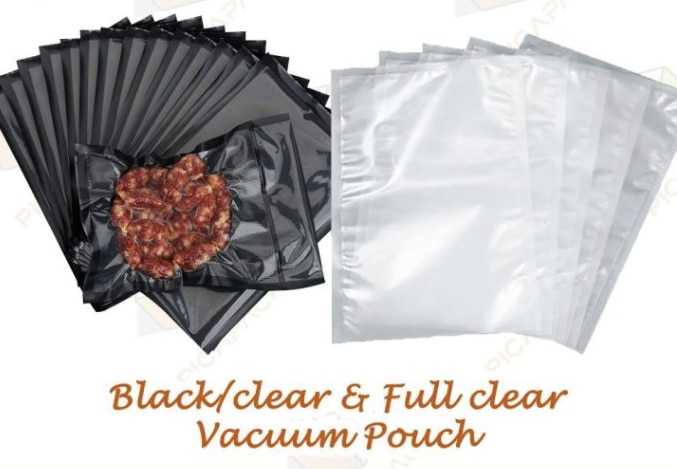 | Vacuum pouch Three side Seal with vacuum pouch Manufacturers We are also supply in Andhra Pradesh, Arunachal Pradesh, Assam, Bihar, Chhattisgarh, Goa, Gujarat, Haryana, Himachal Pradesh,... View product → |
Keywords