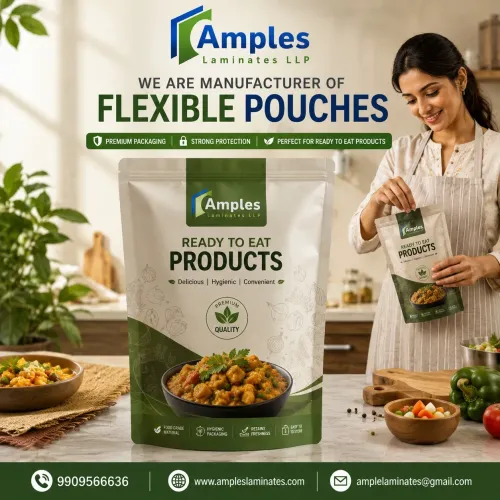
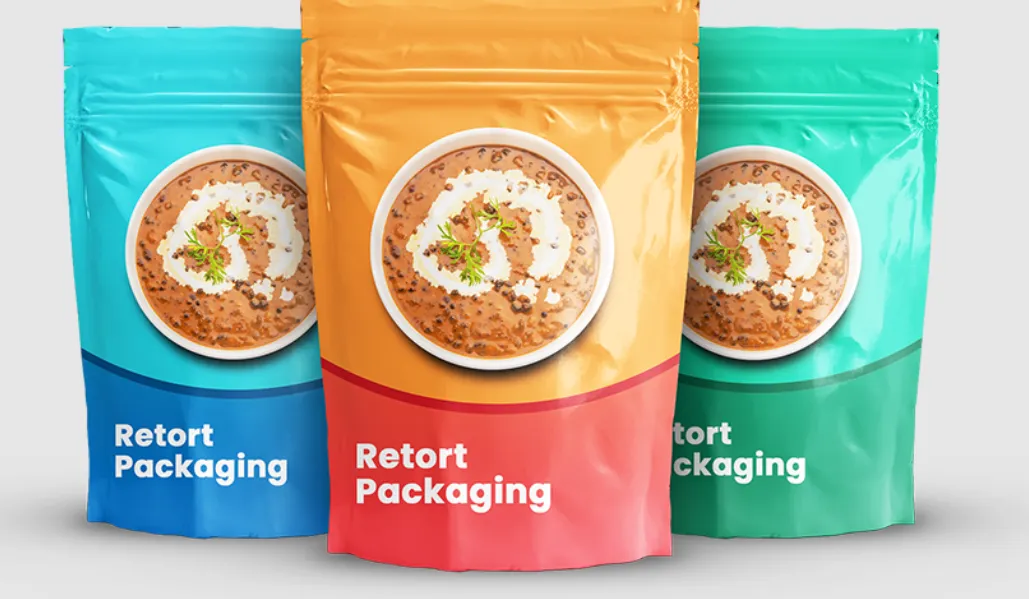
Retort pouches are designed for products that undergo thermal processing after filling and sealing. They are used for selected ready-to-eat foods, gravies, sauces and other shelf-stable applications. Because the package must tolerate demanding combinations of heat, pressure and moisture, retort packaging requires specialised development and validation.
A standard laminated pouch should never be treated as a retort pouch simply because it appears strong or has multiple layers.
Understanding Retort Processing
During retort processing, the filled and sealed package is exposed to controlled thermal conditions to achieve the required level of commercial sterility. The exact process depends on the product, package size, acidity, equipment and validated processing schedule.
The pouch must withstand:
- Elevated processing temperatures
- Pressure changes
- Moisture exposure
- Handling while hot
- Cooling conditions
- Long-term storage
- Product contact throughout shelf life
The packaging and food process must be evaluated together. Changes to pouch size, fill weight or product formulation may affect processing performance.
The Laminate Has Multiple Responsibilities
A retort laminate generally combines layers that provide mechanical strength, barrier performance, bond stability and reliable sealing. The structure must maintain integrity during processing and storage.
Selection may be influenced by:
- Product composition
- Oil and acid content
- Required oxygen barrier
- Light sensitivity
- Processing temperature
- Shelf-life target
- Pouch dimensions
- Distribution conditions
Material recommendations should be supported by technical evaluation. Buyers should avoid selecting a structure based solely on a previously used pouch for a different product.
Seal Integrity Is a Safety-Critical Consideration
Sealing is one of the most important aspects of retort packaging. Incomplete seals, wrinkles, contamination or unsuitable sealing parameters can compromise the package.
Production controls should address:
- Seal temperature
- Seal pressure
- Dwell time
- Seal width
- Cleanliness of the sealing area
- Pouch alignment
- Filled headspace
- Cooling and handling practices
Sealing equipment should be maintained and monitored. Operators also need a clear procedure for identifying and isolating defective pouches.
Validation Cannot Be Replaced by Visual Inspection
A pouch may appear normal while having weaknesses that are not visible. Retort projects typically require validation through appropriate technical and food-safety specialists.
Evaluation may include seal-strength checks, burst or compression assessment, leakage testing, laminate-bond examination and shelf-life studies. Thermal process validation is a separate but connected requirement that should be managed by qualified professionals.
Commercial production should begin only after the complete system has been validated for the intended product and process.
Avoiding Common Procurement Mistakes
Businesses entering the ready-to-eat segment sometimes focus on printing and pouch appearance before confirming the processing conditions. This can delay development and create avoidable redesign costs.
Procurement teams should first gather:
- Product formulation details
- Filling temperature
- Target fill weight
- Expected retort conditions
- Required shelf life
- Storage environment
- Pouch dimensions
- Applicable regulatory requirements
- Testing and validation plan
Artwork can then be developed within a technically confirmed structure and format.
Support for Gujarat’s Food Processing Sector
Gujarat has a diverse food-manufacturing base producing traditional foods, sauces, ready meals and export-oriented products. Retort packaging can support shelf-stable distribution, but only when packaging development is integrated with food processing and quality assurance.
Amples Laminates LLP manufactures laminated pouch solutions for commercial applications. Any retort requirement should be discussed with complete processing details and evaluated through relevant trials before routine supply.
Retort pouches are engineered packaging systems, not ordinary pouches with additional thickness. Careful material selection, clean sealing and process validation are essential to achieving reliable performance.
Keywords