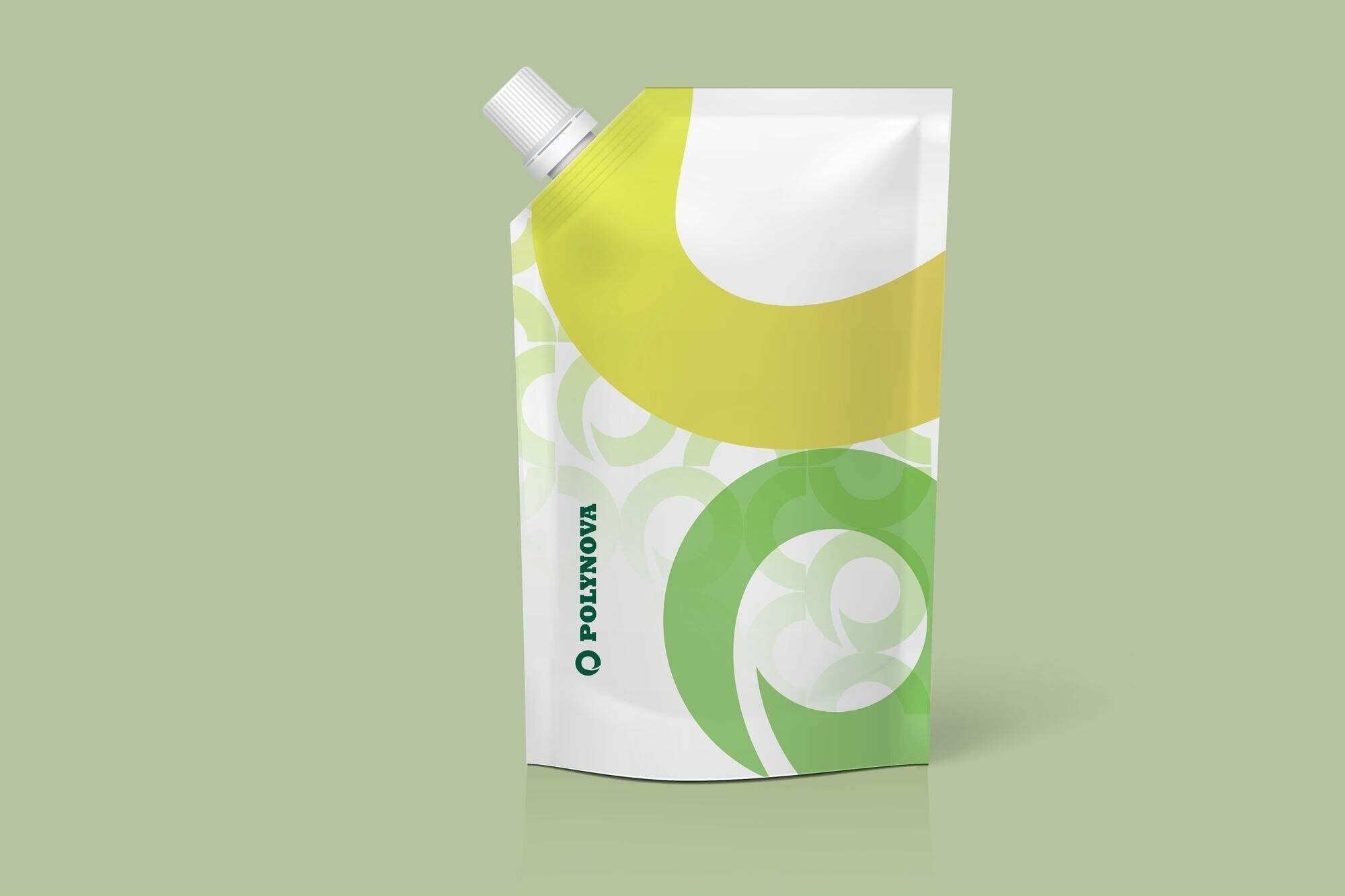
A spout pouch that looks convenient can still fail if its materials interact with the medicine, deliver inconsistent doses, or leak after transport. By the end, you will be able to match the pouch to the formulation, dose, barrier requirement, closure, testing plan, and supplier documentation.
Key takeaways
- Confirm formulation and laminate compatibility before selecting a pouch.
- Match pouch capacity and spout size to the prescribed dose.
- Specify oxygen, moisture, light, and chemical barrier requirements.
- Request seal tests, transport testing, and complete supplier documentation.
Does the Formulation Suit a Spout Pouch?
Decide whether the formulation suits a spout before comparing pouch size or appearance. Pharmaceutical spout pouches are suitable only when the complete package preserves the medicine throughout its intended storage period.
1. Classify the formulation first. Oral liquids and syrups need flow, pH, water activity, ethanol or solvent, surfactant, preservative, and flavour-system review. Suspensions and particulate formulations need settling, redispersion, particle-size, and bore-blockage assessment.
Topical liquids, gels, and oils require viscosity, solvent, sorption, and permeation testing, while oxygen- or light-sensitive products need protection against oxidation and photodegradation.
2. Treat the pouch, spout, cap, adhesive, ink, sealant, and closure as one container-closure system. Require evidence that every contact material is nonreactive, nonadditive, nonabsorptive, and protective against contamination or deterioration for the specific formulation and storage period.
Ask for product-specific extractables, leachables, sorption, and permeation assessments; a generic food-packaging statement is not evidence of pharmaceutical compatibility.
3. Separate clean, controlled, non-sterile liquid medicines from sterile products and injectables. A sterile application requires validated sterilisation compatibility, microbial control, seal integrity, particulate-generation limits, and product-container interaction testing. Examine the entire package after the intended heat, radiation, or gas process, including inks, adhesives, fitment, and seals.
Reject a conventional pouch when the supplier cannot validate that complete system for the intended sterile process. A catalogue image proves appearance, not compatibility, protection, or sterility assurance.
How Should Capacity, Spout Size, and Dose Guide the Format?
A 10 mL dose twice daily for seven days needs 140 mL of product, then additional allowance for the expected remainder, headspace, and squeezing room. Specify usable fill volume, not just external pouch dimensions; insufficient headspace or squeeze space can drive liquid into the seal or cap.
Nominal capacity is not delivered dose. Qualify the medicine liquid spout pouch with its actual spout bore, cap, formulation viscosity, temperature range, and dispensing orientation. Measure first-dose and last-dose volume, residual product, flow interruption, dose repeatability, and the effect of tilting or squeezing.
Use a narrow opening for low-viscosity liquids when controlled flow matters. Choose a wider bore for viscous gels, syrups, suspensions, or particles, but requalify flow rate, spill risk, closure torque, opening effort, and cap sealing. Specify a tear-off tip, breakable ring, or foil seal for tamper evidence; none automatically provides child resistance or microbiological integrity.
| Option | Repeat dosing and accuracy | Portability, damage, handling |
|---|---|---|
| Medicine liquid spout pouch | Resealable; test dose repeatability and residual loss | Light and compact; flex, crease, and spout stress need testing |
| Bottle | Good for measured repeat doses with a dosing aid | Rigid but heavier; easier to store upright |
| Sachet or stick pack | Strong unit-dose accuracy; no remainder | Portable, but unsuitable for repeated access |
| Ampoule | Sealed single dose | Fragile and harder to open safely |
| Blister pack | Precise solid-dose separation | Not suitable for liquid medicines |
Choose a unit-dose sachet or blister when one-time dosing, hygiene, or dose accuracy outweighs resealability.
Which Laminate and Barrier Properties Does the Medicine Need?
Specify the laminate from the medicine’s failure risks, not from a nominal structure such as “high barrier.” Map each risk to measurable evidence before approving the pouch.
| Risk | Material question | Required evidence |
|---|---|---|
| Moisture | Is the formulation water-sensitive or hygroscopic? | Water vapour transmission rate, linked to water activity and stability data |
| Oxygen | Can oxygen oxidise the active, preservative, or flavour system? | Oxygen transmission rate for the film and complete closure system |
| Light | Does the formulation have photostability limits? | Light-transmission data for the finished pouch |
| Aroma | Are ingredients volatile or odour-sensitive? | Aroma permeation and retention data |
Require test results for the finished pouch, including laminate, spout, cap, fitment welds, seals, and sealant. A low-OTR film cannot compensate for oxygen entering through a permeable cap, residual headspace, or a seal-channel defect. An opaque flat laminate also fails as proof of light protection after printing, scoring, fitment welding, or sealing.
Request composition details for every contact and barrier component: film layers, resin grades, adhesive, ink, spout, cap, and sealant. The compatibility protocol must state storage temperature, contact time, ethanol or other solvents, oils, surfactants, pH, and preservatives, then assess extractables, leachables, sorption, and permeation.
Set acceptance limits from stability and photostability data. Reject labels such as “pharma grade” unless the supplier connects them to product-specific barrier and compatibility results.
How Do You Prevent Leakage, Opening Failure, and Transport Damage?
Set pass/fail criteria for every leakage and opening point before approving a pharmaceutical spout pouch:
- Fitment weld: no channel leaks or separation after pressure and flex testing.
- Cap and thread: defined removal torque, reclosure torque, and leak limit.
- Pouch corners: no splits, pinholes, or stress cracks.
- Body seals: specified seal-strength range with no open paths.
- Seal channels: no dye penetration or bubbles at the stated test pressure.
Seal strength is not leak tightness. ASTM F88/F88M measures the force required to separate a seal; ASTM F1929 dye penetration and ASTM F2096 bubble testing detect different channel, pinhole, and gross-leak defects.
Validate the sealing process at minimum and maximum temperature, pressure, dwell time, line speed, laminate thickness, pouch contamination, jaw condition, and spout-weld geometry. Request production-speed evidence and minimum and maximum validated settings, not only a successful laboratory sample.
Run transport simulation and flex-fatigue testing for drops, compression, vibration, aging, crease-induced pinholes, delamination, cap loosening, and spout-to-film stress. Define post-test limits for leakage, torque, seal strength, and dispensing.
Specify tamper evidence separately from child resistance. A tear-off tip, breakable ring, or foil seal shows opening, but does not prove child-resistant performance or microbiological integrity. Where required, qualify the complete marketed package under the applicable regime, including 16 CFR Part 1700 in the United States.
What Should You Request From a Pharmaceutical Pouch Supplier?
A supplier is qualified by evidence, not by a local address or the word “pharmaceutical” in its profile. Use this checklist before approving custom pharmaceutical pouches in Ahmedabad:
1. Request approved pouch and fitment drawings, laminate and resin specifications, adhesive and ink declarations, certificates of analysis, lot traceability, retained-sample policy, complaint-handling procedure, change-control commitments, and supplier-audit access.
2. Ask for minimum and maximum validated sealing settings, including temperature, pressure, dwell time, jaw condition, contamination tolerance, laminate thickness, spout-weld geometry, and line speed. Require production-speed seal results, burst or seal-strength data, ASTM F1929 dye or ASTM F2096 bubble-test methods, and transport-test reports covering drops, vibration, compression, flexing, cap loosening, and delamination.
3. Require oxygen-transmission and moisture-transmission data for the complete system, including spout and cap, plus product-specific extractables, leachables, sorption, and permeation support. Request light-barrier evidence after printing, scoring, fitment welding, and sealing rather than accepting “opaque” as a specification.
4. Demand a documented impact assessment for any change to sealant grade, resin supplier, extrusion conditions, adhesive, ink, spout geometry, cap, or manufacturing site. Each change can alter compatibility, torque, dispensing, oxygen ingress, or integrity; make stability, integrity, and dose-performance requalification contractual where needed.
Evaluate a pharmaceutical spout pouch manufacturer in Ahmedabad or a pharma packaging manufacturer in Gujarat against this dossier. Amples Laminates LLP belongs in that comparison only if it supplies this practical qualification evidence.
Related product
 | Spout Pouches Manufacturers We are also supply in Andhra Pradesh, Arunachal Pradesh, Assam, Bihar, Chhattisgarh, Goa, Gujarat, Haryana, Himachal Pradesh,... View product → |
Frequently asked questions
When is a pharmaceutical spout pouch suitable for a medicine?
Use one when the formulation remains stable in contact with the selected pouch layers and the complete pack protects it throughout its intended storage period.
How do capacity, spout size, and dose affect pouch selection?
Choose capacity around the fill volume and headspace requirement, then size the spout and closure for accurate dosing, easy handling, and controlled flow.
Which barrier properties should a pharmaceutical spout pouch provide?
Specify protection against the formulation’s actual risks, including oxygen, moisture, light, aroma loss, and chemical migration. Match the laminate to the medicine and storage conditions.
How can you reduce leakage and opening failure?
Control seal width, seal temperature, fill contamination, spout attachment, and cap fit. Request leak, burst, drop, and transport testing for the finished pack.
What should you request from a pharmaceutical pouch supplier?
Request material specifications, laminate structure, seal test results, compatibility evidence, batch traceability, drawings, filling guidance, and the supplier’s applicable manufacturing licence documents.
Keywords