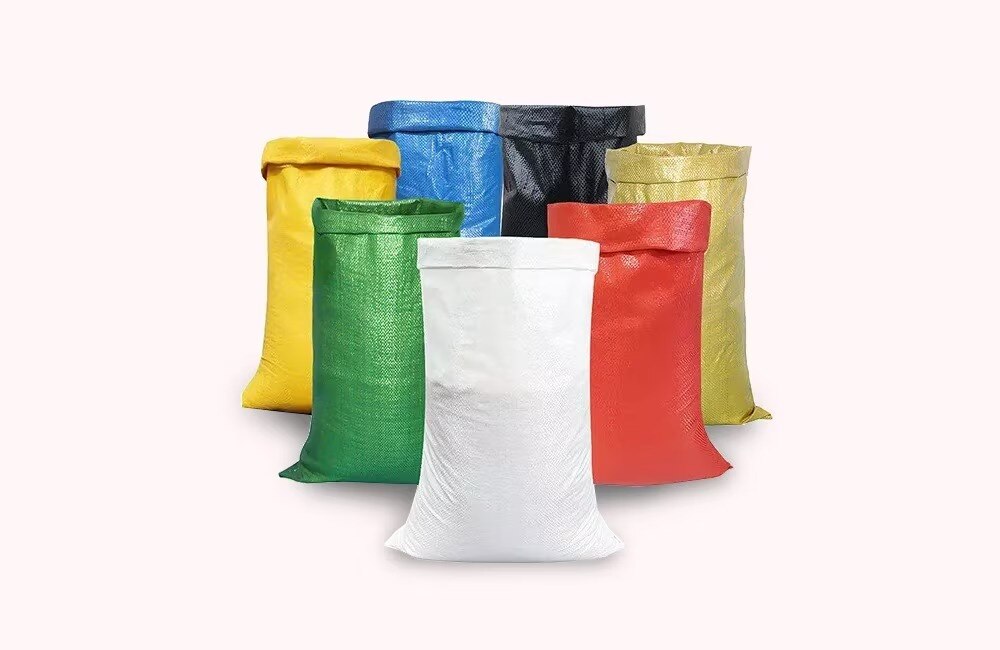
The right bag depends on more than the stated kilogram capacity. You need to match bulk density, filling method, product hazards, barrier needs, pallet dimensions, print requirements and order volume before comparing quotations.
Key takeaways
- Size bags by bulk density, filled capacity and handling unit—not net weight alone.
- Match bag construction to filling equipment, stacking loads and product flow.
- Specify fabric strength, closure and barrier protection as one packaging decision.
- Choose BOPP printing when order volume justifies its setup and approval work.
Start with bulk density, handling unit and filled capacity
Choose bag size from your product’s bulk density and handling unit, not from net weight alone. A 25 kg product at 0.50 kg/L occupies about 50 L; at 0.80 kg/L, it occupies about 31.25 L. Add room for filling tolerance, settling and closure without leaving the bag slack or overfilled.
| Handling unit | Load category | Specify before quotation |
|---|---|---|
| Manual sack | 10–50 kg | Filled weight, loose and tapped density, dimensions and carrying method |
| Mechanized sack | More than manual-handling loads | Forklift or conveyor handling, lifting points, safe working load and emptying method |
| FIBC | Hundreds or thousands of kilograms | Rated safe working load, filling and discharge equipment, pallet footprint and lifting loops |
For woven bags for bulk products, the handling decision comes before fabric selection. Ask for a bag that matches the filling and emptying equipment, then confirm that its filled footprint will stack safely.
A tall, narrow sack can hold the required mass yet make a pallet unstable; a wider or block-bottom design can improve load stability and cube use.
Include these figures in the RFQ:
- Target filled weight and acceptable tolerance
- Loose and tapped bulk density
- Bag length, width, gusset and filled height
- Pallet size, bags per layer and maximum stack height
- Transport mode and expected storage duration
Treat generic pp woven bags quotations cautiously: two bags with the same stated kilogram capacity can require different dimensions, fabric strength and closures. For flour, starch or fine mineral powder, state the leakage risk and request sift-proof seams, coating or a polyethylene liner rather than relying on “laminated” alone.
Match the bag format to filling, stacking and product behaviour
Choose the format by filling method and pallet geometry, not capacity alone. For 25–50 kg granules, seeds, animal feed and many powders, an open-mouth pp woven bags format is practical: fill through the top, then close it by sewing or heat sealing. Fine powders can sift through needle holes, so closure design matters.
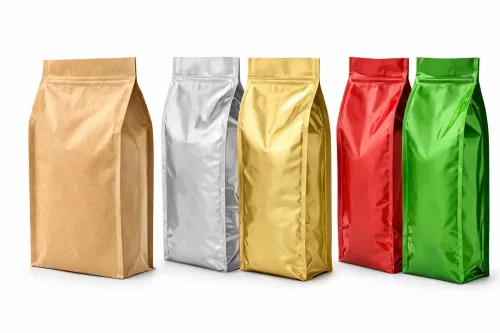
Option | Filling and closure | Best fit and limitation Open-mouth, sewn-mouth | Top filling; sewn, heat-sealed or paper/PP-closed | Manual or varied filling of granules and feed; stitched seams can leak fine powder Valve | Pneumatic or mechanical filling through a closed port | Dusty powders and clean, fast lines; requires compatible equipment and offers less filling flexibility Block-bottom | Formed square base | Regular layers, stable pallets and better cube use; needs matching filling and conversion equipment Gusseted | Folded sides increase usable width and squareness | Bulky products or improved stacking; extra folds and seams need checking for abrasion FIBC | Four lifting loops with bulk capacity | Forklift or crane handling; select single-trip, standard reusable or certified reusable construction An open-mouth bag is more tolerant of manual filling, while a valve bag reduces product escape on a dedicated line.
Block-bottom does not automatically carry more weight; its advantage is a rectangular filled shape. A tall, narrow sack can destabilise a pallet even when its load is correct.
State pallet size, bags per layer, maximum stack height and transport mode in the RFQ. For FIBCs, confirm safe working load and inspection history; cut, contaminated, UV-damaged or previously overloaded bags are not suitable for another lift.
Specify fabric strength, closure and barrier protection together
A heavier fabric is not automatically a safer bag. Set grammage, tape denier and weave density against the filled weight, drop height and handling equipment; then verify seam strength, bottom construction and closure performance. A strong body with weak stitching still fails at the mouth or corners.
- Moisture-sensitive product: use a properly fitted polyethylene liner or validated heat-sealed inner layer. Add coated or laminated woven fabric when surface moisture, dust and print protection matter, but do not treat lamination as waterproofing; needle holes, seams and damaged film remain entry paths.
- Fine powder: specify sift-proof stitching, seam tape or an inner liner matched to the particle size. A sewn-mouth closure with uncontrolled needle holes can leak flour or mineral dust even when the outer fabric is laminated.
- Abrasive product: increase fabric grammage and tape denier only with a tighter, consistent weave and reinforced seams. Specify a closure and bottom construction that tolerate dragging, drops and repeated pallet handling; inspect filled-bag drop results rather than relying on GSM alone.
- Leakage-sensitive product: choose a liner or heat-sealed inner bag, then confirm that the mouth closure seals around the filling method. A coating reduces surface passage, but it does not seal sewn seams.
Ask for fabric GSM, tape denier, weave count, seam type, stitch pattern, liner thickness, coating or lamination details and safe working load on the quotation. Require filled-bag drop, seam-strength, rub and leakage tests using your actual product; attractive fabric cannot compensate for an unsuitable closure.
Decide whether BOPP printing earns its place at your order volume
BOPP earns its place when the bag must sell on the pallet or shelf: choose it for high-resolution graphics, several colours, scuff-resistant panels, or a retail-facing product. For a plain industrial load, flexographic printing on woven fabric or no printing usually avoids film, artwork setup and extra handling costs.
| Option | Trial quantity | Repeat quantity | Pallet quantity |
|---|---|---|---|
| Plain bag | Lowest setup and inventory exposure; best for unbranded testing | Efficient when appearance is secondary | Compare filled footprint and stack stability, not only bag price |
| Flexographic woven bag | Suitable for one-colour or simple artwork | Strong choice for recurring industrial orders | Check print rub and readability after transport |
| BOPP woven bag | Use only when graphics must be evaluated in filled-bag trials | Justified when branding, multiple colours and repeat volume spread setup costs | Select it when presentation and abrasion resistance protect sales value |
Compare total delivered cost, including cylinders or plates, setup, print rejects, outer packing, freight and inventory. A low trial price can hide a repeat-order minimum; a low unit price can leave you holding excess printed stock.
Give a custom pp woven bags in ahmedabad brief with dimensions, filled weight, density, liner, closure, artwork, colours, test standard, annual quantity and delivery schedule. Ask a pp woven bag manufacturer in ahmedabad or pp woven bag supplier in gujarat to quote identical specifications. Amples Laminates LLP can be included in that like-for-like comparison.
For pallet quantities, state pallet size, bags per layer, maximum stack height and transport mode.
Related products
 | PP (Polypropylene) Woven Bags are one of the most widely used packaging solutions for industrial, agricultural, chemical, food, and construction... View product → |
 | BOPP (Biaxially Oriented Polypropylene) Woven Bags are high-strength packaging bags manufactured by laminating a printed BOPP film onto a woven... View product → |
Turn the choice into a quotation and approval checklist
A comparable quotation needs a complete specification, not “custom PP woven bags.” Send the supplier the target filled weight, loose and tapped bulk density, finished dimensions, annual quantity, trial quantity, delivery schedule and required pallet quantity.
1. State the construction: open-mouth, sewn-mouth, valve, block-bottom, gusseted or FIBC. For an FIBC, specify safe working load, dimensions, lifting-loop arrangement, filling and discharge design, and safety factor. Request compliance evidence against ISO 21898.
2. Define materials: fabric grammage, tape denier, weave density, coating or lamination, liner material and thickness, seam type, closure, colour and print process. For fine powders, state the required sift-proof seam or polyethylene liner; “laminated” alone does not prove leak control.
3. Put tolerances in the quotation. Include bag length and width, filled weight, fabric weight, liner thickness, print registration, moisture barrier performance and acceptable defect limits.
4. Request test reports for fabric tensile strength, seam strength, filled-bag drop and stacking or compression performance. Add leakage or sift testing for flour, starch and mineral powders.
5. For BOPP printing, require rub resistance, print adhesion and filled-bag abrasion results. Attractive graphics do not prove that panels will survive handling.
6. For food, pharmaceutical or feed use, request a declaration of compliance, material composition, ink and adhesive details, plus migration evidence. For EU food contact, identify Regulation (EU) No 10/2011 and Regulation (EC) No 1935/2004.
Approve a signed pre-production sample only after its dimensions, weight, closure, print and test results match the quotation. Record the approved artwork and sample reference for every repeat order.
Frequently asked questions
How do you calculate PP woven bag capacity from product weight?
Divide product weight by bulk density to estimate occupied volume. For example, 25 kg at 0.50 kg/L occupies about 50 L, while 25 kg at 0.80 kg/L occupies about 31.25 L. Add room for filling tolerance, settling and closure.
Which PP woven bag format suits different filling and stacking conditions?
Choose the format after checking your filling equipment, product flow, required handling unit and stacking pattern. Free-flowing products, dusty materials and products that settle require different filling and closure decisions.
What should you specify besides bag size?
Specify fabric strength, closure type and barrier protection together. Include the product’s handling conditions, stacking load and protection needs so the quotation reflects the complete bag construction.
When does BOPP printing make sense for PP woven bags?
Compare BOPP printing with your order volume, artwork requirements, setup effort and approval process. It earns its place when the visual finish and printed information justify those costs and production steps.
Keywords