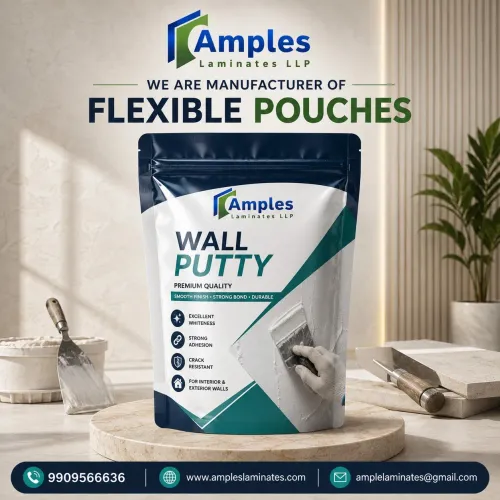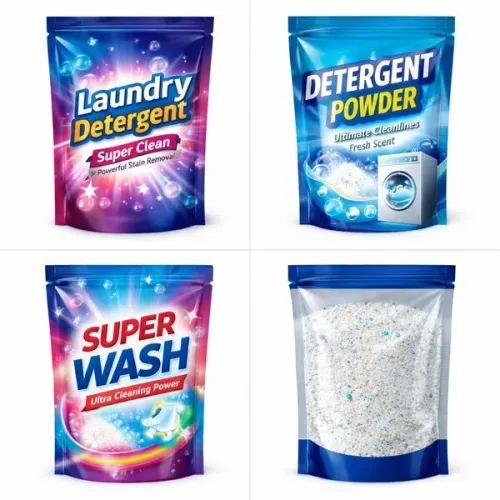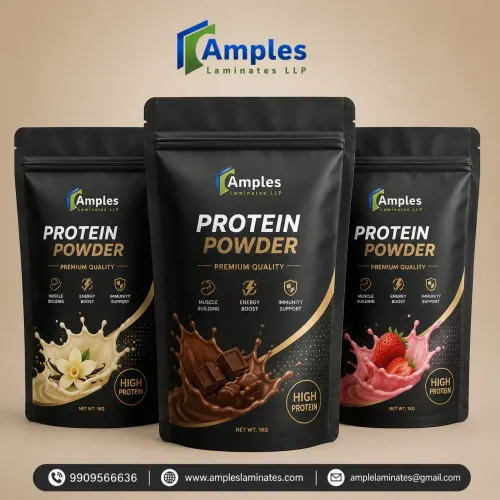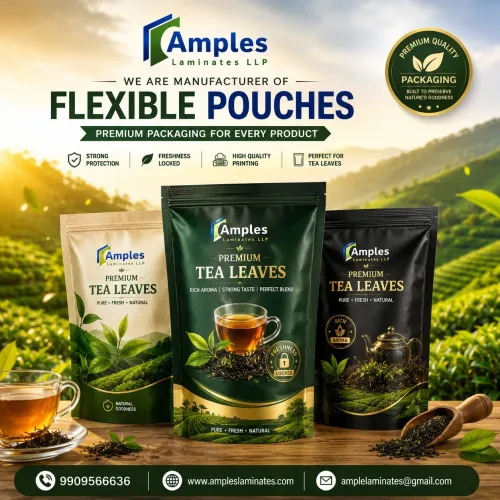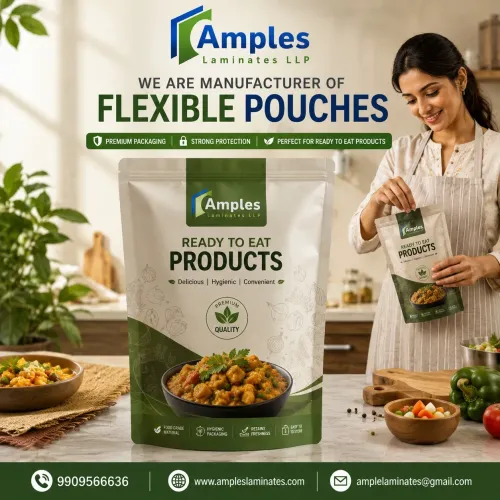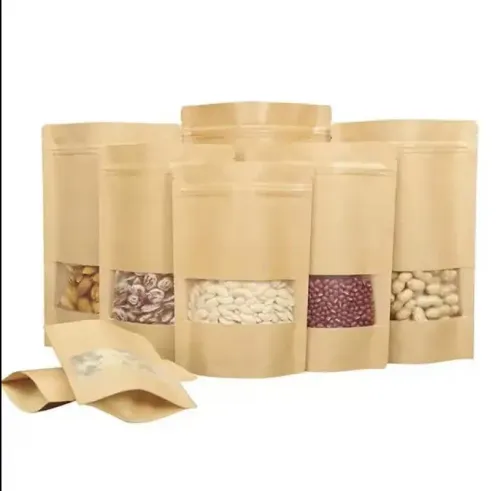
Stand-up pouches have become a widely used flexible packaging format because they combine shelf visibility with relatively efficient material use. Their bottom gusset expands when filled, allowing the pouch to stand upright on retail shelves while remaining flat before filling.
The format is used for snacks, confectionery, dry fruits, spices, grains, pet products, detergents and many other food and FMCG categories. Its suitability, however, depends on the product, filling process and selected laminate.
How Stand-Up Pouches Work
A stand-up pouch is formed with a specially designed bottom gusset. As the pouch is filled, this gusset opens and creates a stable base. The front and back panels then provide space for printed branding, product details and regulatory information.
Common options include:
- Plain or printed laminates
- Transparent product windows
- Press-to-close zippers
- Tear notches
- Hang holes
- Rounded corners
- Degassing valves
- Spouts for compatible liquid products
- Gloss, matte or combined surface finishes
Not every feature is necessary for every product. Accessories should be selected according to how customers will store, open and use the contents.
Products That Benefit From This Format
Stand-up pouches are often suitable when shelf presentation and consumer convenience are important. They can work particularly well for products sold in lightweight retail quantities.
Typical applications include:
- Namkeen and snack foods
- Dry fruits and nuts
- Tea and coffee
- Spices and seasoning blends
- Cereals and grains
- Bakery ingredients
- Confectionery
- Pet treats
- Household powders
- Nutritional products
Products with sharp edges, high oil content or unusual barrier needs require careful structure selection. A pouch should not be chosen solely because the format is visually attractive.
Important Material Considerations
The laminate provides the pouch’s printing surface, strength, barrier and sealability. A manufacturer may use two or more layers, with each layer performing a specific function.
When selecting a structure, buyers should consider:
- Required shelf life
- Sensitivity to oxygen and humidity
- Exposure to sunlight
- Product weight
- Resistance to punctures
- Filling temperature
- Sealing equipment
- Distribution distance
PET-based outer layers are commonly used for printability and strength, while PE-based inner layers can provide heat-sealing performance. Other structures may be selected when enhanced barrier or processing resistance is required.
Dimensions Affect Usability
The nominal product weight alone is not enough to determine pouch size. Two products with the same weight can occupy different volumes. Powder density, particle size, product shape and required headspace all influence the correct dimensions.
Before commercial manufacturing, a filling trial should confirm:
- Product fit
- Pouch stability
- Seal clearance
- Shelf appearance
- Ease of filling
- Carton arrangement
An oversized pouch increases material consumption and may look underfilled. An undersized pouch can be difficult to close and may compromise the top seal.
Opportunities for Gujarat-Based Brands
Food processing and FMCG businesses across Gujarat serve local retail markets, national distributors and export customers. Stand-up pouches can help these companies standardise packaging across multiple product sizes while creating a strong printable display surface.
Amples Laminates LLP manufactures flexible pouch formats for commercial packaging applications. Brands evaluating stand-up pouches should begin with the product characteristics and filling conditions, followed by visual and convenience features.
A successful stand-up pouch balances three requirements: protection, production compatibility and consumer usability. When the structure, dimensions and accessories are validated together, the format can support both shelf presentation and dependable distribution.
Keywords