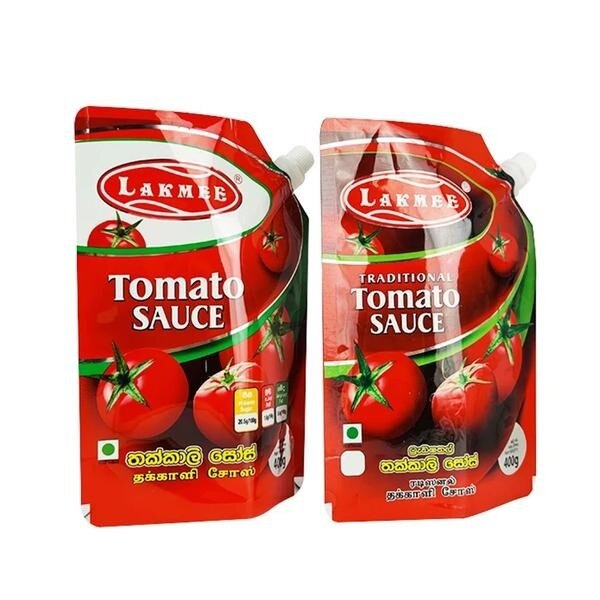
A useful supplier comparison starts with more than a per-piece quote: you need the laminate, fitment, order quantity, filling conditions and delivery terms behind that number. By the end, you can compare Ahmedabad manufacturers and distributors, estimate a realistic condiment spout pouch price, and send an RFQ that produces comparable offers.
Key takeaways
- Ask whether the supplier manufactures film, pouches, fitments or only resells stock.
- Compare prices using pouch size, laminate structure, order quantity and spout specification.
- Match laminate barrier and spout diameter to sauce viscosity, acidity and filling temperature.
- Approve samples after checking seal strength, leakage, dimensions and filling-line performance.
How to compare sauce spout pouch suppliers in Ahmedabad
Compare the supplier’s operating role before comparing its price. A local manufacturer runs film printing, lamination, pouch conversion or fitment welding; a distributor buys finished stock or rollstock and resells it. A catalogue listing does not prove Ahmedabad production.
Ask every sauce spout pouch supplier in Ahmedabad for this checklist:
- Production location, dispatch point, and whether the quoted pack is made in Ahmedabad or sourced from another city or country.
- Premade-pouch or rollstock format, MOQ per size, SKU and artwork, carton quantity, rejection policy, and expected lead time.
- Delivery coverage to Ahmedabad and other Gujarat locations, including freight terms.
- Separate dates for artwork approval, film production, pouch conversion and dispatch.
Custom-printed premade pouches often require tens of thousands of pieces. A practical planning window is about 3–6 weeks after approval; add time for new cylinders, imported fitments or laminate procurement. Rollstock can reduce the quoted material rate, but it transfers pouch-making, spout insertion, machine setup and rejection risk to you.
A direct sauce pouch manufacturer in Ahmedabad can give tighter control over laminate, fitment welding and repeat-order specifications. A distributor may suit smaller quantities or mixed-SKU purchases.
Use this comparison before accepting a quote:
| Supplier type | Evidence to request | Best fit |
|---|---|---|
| Manufacturer | Factory location, process scope, dispatch point | Repeat specifications and control |
| Distributor | Source factory, stock location, carton quantity | Small or mixed-SKU orders |
| Rollstock seller | Conversion responsibility and equipment requirements | Buyers equipped to make pouches |
Do not treat “local supplier” as proof of local manufacture. Verify the address on the quotation, invoice and dispatch documents.
What determines condiment spout pouch price
Printed 100–200 ml pouches often fall around ₹2.50–₹5.50 each, while 500 ml formats often fall around ₹5–₹10 at production quantities near 50,000–100,000 pieces. Treat these as budgetary Indian benchmarks, not firm quotations.
The condiment spout pouch price changes with pouch dimensions, fill volume, laminate thickness and structure, spout diameter, cap and plug design, welding operation, print-colour count, cylinders or plates, order quantity, carton packing, filling method, freight and GST.
An 8.6–10 mm opening suits many pourable sauces. Thicker sauces, chilli flakes or other particulates need a larger opening or wide-mouth fitment to prevent blockage.
Request separate quotation lines for:
- Pouch conversion
- Fitment and welding
- Cap and plug
- Cylinders or plates
- Freight
- GST
- Sampling and trials
Ask whether the MOQ applies per artwork, SKU, size or combined order. A 50,000-piece total split across five artworks does not produce the same per-pouch cost as 50,000 identical pieces.
Compare the two buying routes before accepting a low unit rate:
| Option | Cost calculation | Main trade-off |
|---|---|---|
| Premade pouches | Piece price plus freight, GST and sampling | Higher unit price, lower conversion work |
| Rollstock | Film cost plus conversion equipment, labour, setup time, spout insertion and rejects | Lower apparent material rate, higher operating burden |
A roll price is not a pouch price. Calculate every conversion cost and rejected pouch before comparing it with finished units.
Which laminate, capacity and spout suit your sauce
Your recipe decides whether a spout pouch for sauces retains freshness, dispenses cleanly and withstands handling. Use PET/PE for standard sauces, PET/NY/PE when puncture resistance matters, and PET/AL/PE or PET/MetPET/PE when oxygen and light protection are required.
Ask the supplier for:
- Layer names, gauges, oxygen and moisture barrier data, aroma-retention information, sealant compatibility and food-contact documentation for the complete package, including laminate, ink, adhesive, fitment, cap and inner sealant—not just a “food-grade” claim.
- Your sauce’s viscosity, acidity, oil content, salt, spices, preservatives and suspended particles. Chilli flakes can obstruct a narrow opening and contaminate the seal.
- The recommended spout diameter, cap type, cap colour and tamper-evident feature.
Match 100–200 ml to single-serve or trial portions and 500 ml to household or food-service use only after checking finished dimensions, gusset geometry and available shelf space.
| Structure | Use | Main check |
|---|---|---|
| PET/PE | Standard pourable sauces | Sealant and shelf-life compatibility |
| PET/NY/PE | Puncture-prone handling or transport | Nylon barrier and weld strength |
| PET/AL/PE or PET/MetPET/PE | Oxygen- or light-sensitive sauces | Barrier performance and aroma retention |
Require compatibility testing with the actual recipe, not water alone. Oil, acid and spices affect odour transmission, migration, seal contamination and delamination; test the filled pouch through storage, including the fitment weld and cap seal.
What to confirm before filling and approving a supplier
Approve a liquid product pouch supplier only against your filling process, finished pack and test evidence. Use this checklist before placing a production order:
1. State whether you need empty premade pouches or rollstock, and name the filling equipment: manual, semi-automatic or automatic. Record capacity, fill volume, finished dimensions, layer names and gauges, spout size, cap colour, print process, recipe type, viscosity, shelf life, carton quantity and documentation.
2. Record fill temperature, hold time, cooling process, headspace, sealing temperature, dwell time and seal width. Hot-filled sauces need laminate approval at those exact conditions because heat can distort seals, shrink film or cause delamination.
3. Require finished-pouch trials using the proposed film, fitment and sealing settings. Ask for seal-strength results, burst-test results, drop-test results, cap-torque checks, inverted-storage results and transport-vibration performance, with test methods and acceptance limits rather than “leak-proof.”
4. Inspect the fitment-to-film weld, bottom gusset, cap liner and seal area after filling. Add slow-leak checks after storage; immediate visual inspection will not expose every stressed weld or poorly seated liner.
5. Request food-contact declarations for the complete package: laminate, ink, adhesive, fitment, cap and inner sealant layer. A declaration for outer PET alone is insufficient.
6. A buyer assessing Amples Laminates LLP can send the same RFQ to any Ahmedabad supplier, then compare documented results rather than promises. Approve only after the supplier confirms the proposed pouch, machine settings and recipe together.
Related product
 | Spout Pouches Sauce and Condiment Spout Pouches Manufacturers We are also supply in Andhra Pradesh, Arunachal Pradesh, Assam, Bihar, Chhattisgarh, Goa, Gujarat, Haryana, Himachal Pradesh,... View product → |
When a spout pouch beats a bottle, jar or sachet
Choose a spout pouch when resealing and controlled pouring matter more than rigid handling. A sachet usually wins on low unit cost and single use; the spout pouch reduces transport weight and stands out better on shelves.
| Format | Main advantage | Best fit |
|---|---|---|
| Sachet | Lowest unit cost; single use | Trial portions and one-time servings |
| Spout pouch | Resealable, controlled pouring, light transport | Sauces used over several servings |
| Bottle or jar | Rigid handling, familiar tamper evidence, easy stacking | Retail systems needing rigid packs |
| Centre-seal pouch | Basic, low-cost packaging | Simple products without resealing |
| Stand-up zipper pouch | Wide opening and resealing | Dry or semi-solid products needing a spoon |
The pouch also uses less material than many rigid packs and offers a larger flexible print area. It loses that advantage when your line needs very high-temperature hot fill, retort processing, highly abrasive particles, a rigid tamper-evident closure, or equipment you do not have.
Request written confirmation of process limits, retort or hot-fill suitability, closure design and finished-package testing. Do not infer suitability from a room-temperature sample; heat can distort seals or cause delamination.
Compare quotations on convenience, dispensing control, shelf life and operational effort together.
Item | Supplier quote Price per piece | Total landed cost | MOQ | Lead time | Laminate | Spout | Tests | Documentation | Freight | GST |
Frequently asked questions
How do you compare sauce spout pouch suppliers in Ahmedabad?
Confirm whether the company manufactures printed film, laminates, converts pouches, welds fitments or distributes finished stock. Request samples, material specifications, production lead time, minimum order quantity and test records before comparing quotations.
What determines condiment spout pouch price?
Price depends on pouch capacity, film and laminate structure, printing method, pouch dimensions, spout and cap type, order quantity, tooling, freight and quality-testing requirements. Compare quotations with these items separated.
Which laminate, capacity and spout suit a sauce?
Choose the structure after checking the sauce’s oil content, acidity, oxygen sensitivity, viscosity, filling temperature and shelf-life target. Select capacity and spout diameter based on serving size, flow rate, cap retention and filling equipment.
What should you confirm before filling and approving a supplier?
Check pouch dimensions, laminate specification, print approval, seal strength, leak resistance, fitment weld quality, cap torque, batch traceability and compatibility with your filling line. Run filled samples through transport and storage tests.
When does a spout pouch beat a bottle, jar or sachet?
A spout pouch suits sauces when low package weight, compact storage, controlled dispensing and flexible pack formats matter. Choose a bottle, jar or sachet when rigid stacking, wide-mouth access or single-use dosing is more important.
Keywords