Buying flexible packaging in bulk can reduce interruptions, improve batch consistency and support better production planning. However, the lowest quotation does not always represent the lowest total cost. A reliable bulk packaging supplier must be able to maintain material quality, dimensions, printing and delivery schedules across large and repeated orders.
This is especially important for FMCG companies, food manufacturers, exporters and wholesalers whose packaging consumption changes with seasonal demand, new product launches or distributor orders.
Start With Monthly Consumption
Before requesting quotations, calculate how much packaging is actually used. Review at least three to six months of consumption and separate the quantities by pouch size, artwork and product variant.
The estimate should account for:
- Average monthly production
- Peak-season requirements
- Filling-line wastage
- Rejected or damaged packaging
- Safety stock
- Lead time for repeat orders
- Planned product launches
Ordering excessive quantities can lock working capital into inventory. Ordering too little may increase freight costs and expose production to delays. A suitable quantity balances unit economics with realistic consumption.
Evaluate Production Capacity
A supplier may produce an excellent initial sample but still struggle with recurring high-volume orders. Procurement teams should understand whether the manufacturer can handle the required printing, lamination, curing, slitting and pouch-making workload.
Useful questions include:
- What is the normal production lead time?
- Can the supplier accommodate seasonal volume increases?
- How are repeat specifications controlled?
- Is production completed internally or outsourced?
- What happens if a machine or material is temporarily unavailable?
- How are urgent quantity changes managed?
The objective is not to demand unrealistic speed. It is to determine whether the supplier’s capacity matches the buyer’s production rhythm.
Compare Specifications Rather Than Quotations Alone
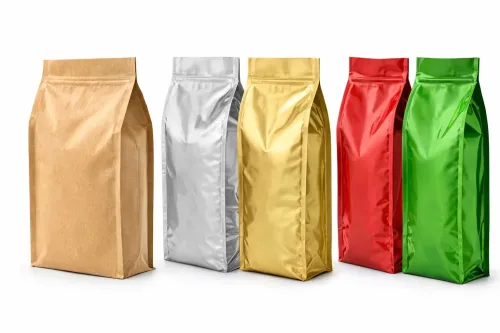
Two quotations may appear to cover the same pouch while using different film structures, thicknesses or accessories. Buyers should compare the full specification, including:
- Laminate composition
- Total thickness or grammage
- Pouch dimensions
- Printing method and number of colours
- Zipper, spout or other fitment
- Seal design
- Quantity tolerance
- Packing method
- Freight and taxes
- Testing requirements
A cheaper structure may be adequate for one product and unsuitable for another. The comparison should therefore focus on fitness for use, not merely cost per pouch.
Review Quality Controls
Bulk orders magnify small inconsistencies. A minor dimensional variation may disrupt an automated filling line, while weak seals can lead to leakage during distribution. Print variation may also make different batches look inconsistent at retail.
Ask how the supplier checks:
- Width and length
- Film thickness
- Seal integrity
- Lamination bonding
- Print registration
- Colour consistency
- Zipper or spout placement
- Finished-pouch appearance
Approved samples and written tolerances provide a practical basis for evaluating future deliveries.
Consider the Gujarat Supply Network
Gujarat has a broad manufacturing and logistics base serving food processing, pharmaceuticals, chemicals, agriculture, retail and export businesses. A bulk packaging supplier familiar with this regional market can better understand industrial dispatch schedules, long-distance transportation and recurring procurement requirements.
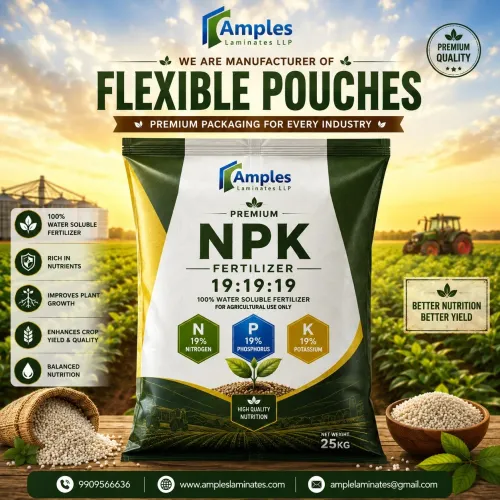
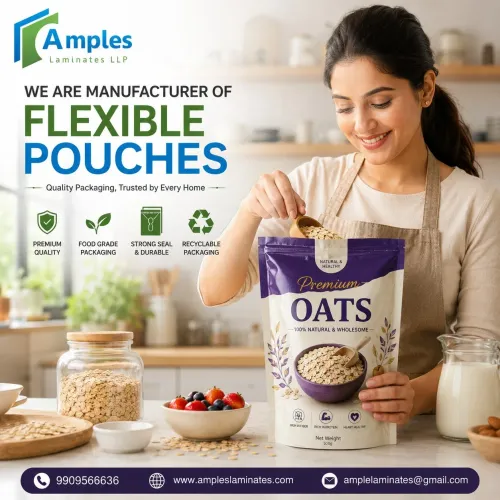
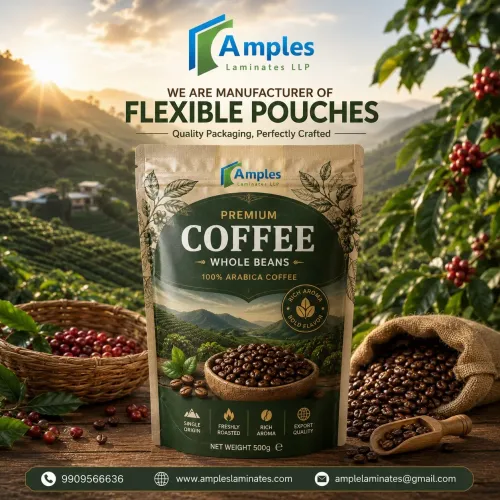
Amples Laminates LLP manufactures flexible laminated packaging for B2B customers across Gujarat and other markets. For procurement managers, the most useful first step is to share an accurate product brief and estimated consumption rather than requesting a price based only on pouch dimensions.
Look Beyond the First Order
A capable bulk supplier should support predictable repeat ordering. This includes maintaining approved artwork, documenting structures, communicating production schedules and informing the buyer when raw-material changes may affect cost or availability.
Good procurement decisions consider the complete relationship: technical suitability, supply reliability, batch consistency, inventory impact and responsiveness. When these factors are reviewed together, bulk packaging becomes a controlled input rather than a recurring source of production uncertainty.
Keywords